
A room for every stage, from first steps to first day of school
Children are grouped by age into three rooms, each named after a flower. Every room has its own educators, its own rhythm for the day and time outdoors every day.
Yuri · 6 months – 2 years
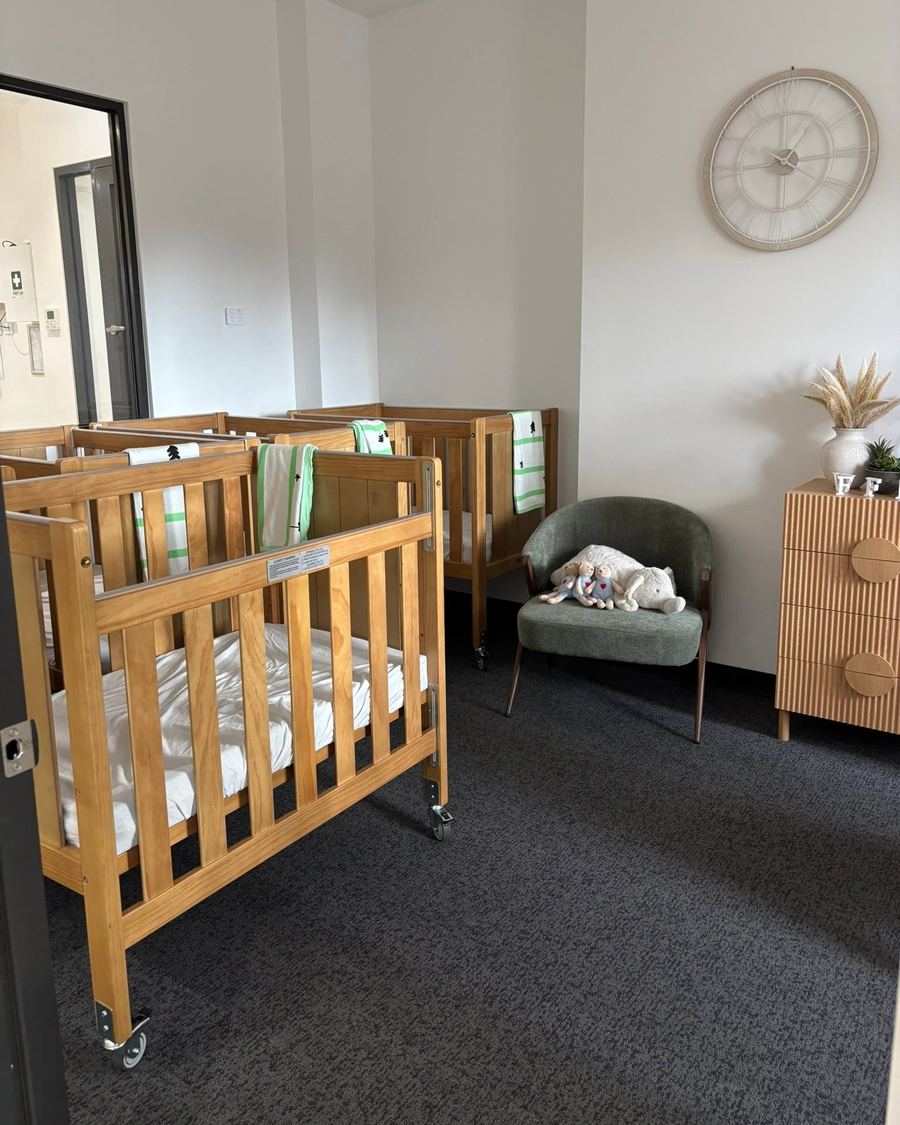
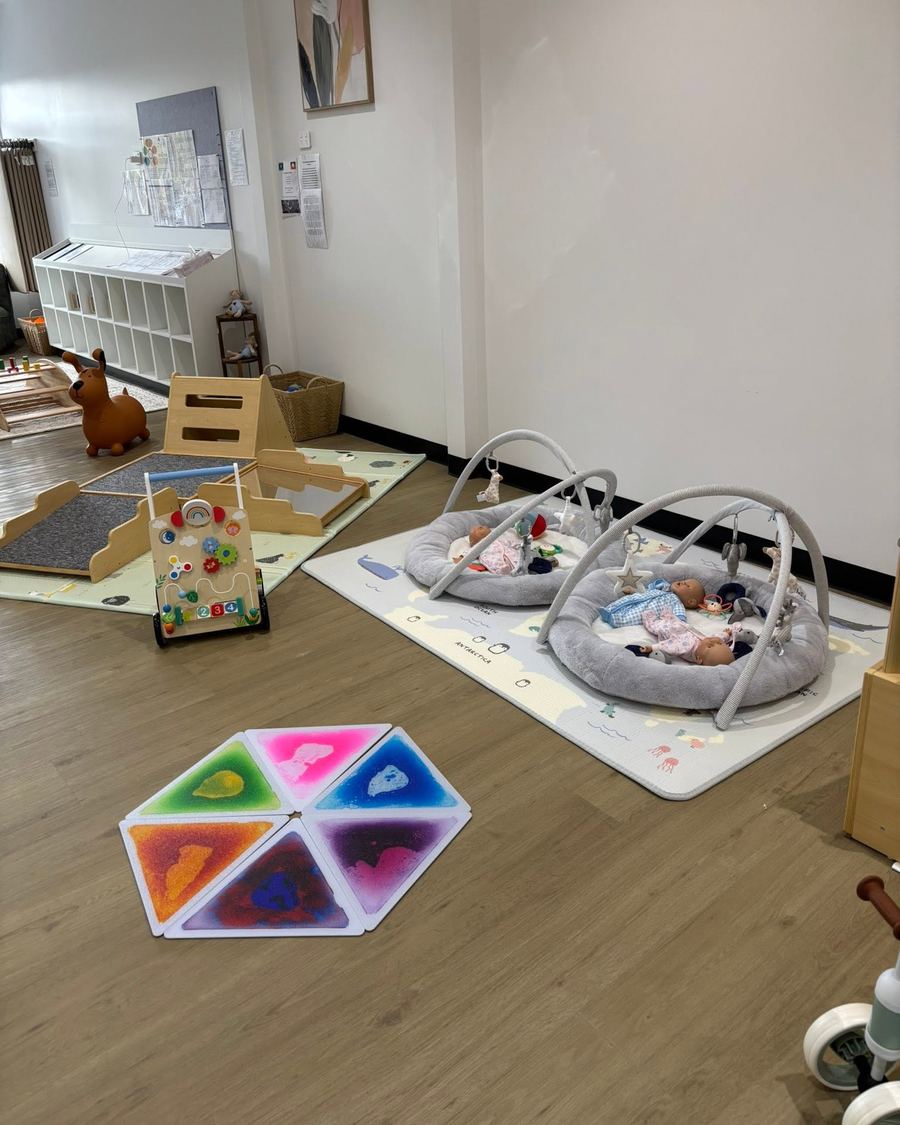
Nurturing, responsive relationships are at the heart of Yuri. We follow each baby's own routine from home as closely as we can, using what you tell us on your All About Me form.
- Sleeps, bottles and nappy changes happen when your baby needs them, not by the clock
- Safe sleep: babies sleep in cots following Red Nose safe sleep practices, and we provide the bed linen
- Milk: we provide cow's milk and soy milk; please bring formula and bottles if your baby uses them
- Play and learning: sensory play, tummy time, music, books, songs and early conversations, planned around each baby's interests
- Calm care routines: nappy changes are unhurried, one-to-one times for talking and connection
- Outdoors every day with natural materials, movement and fresh air
Peony · 2 – 3 years
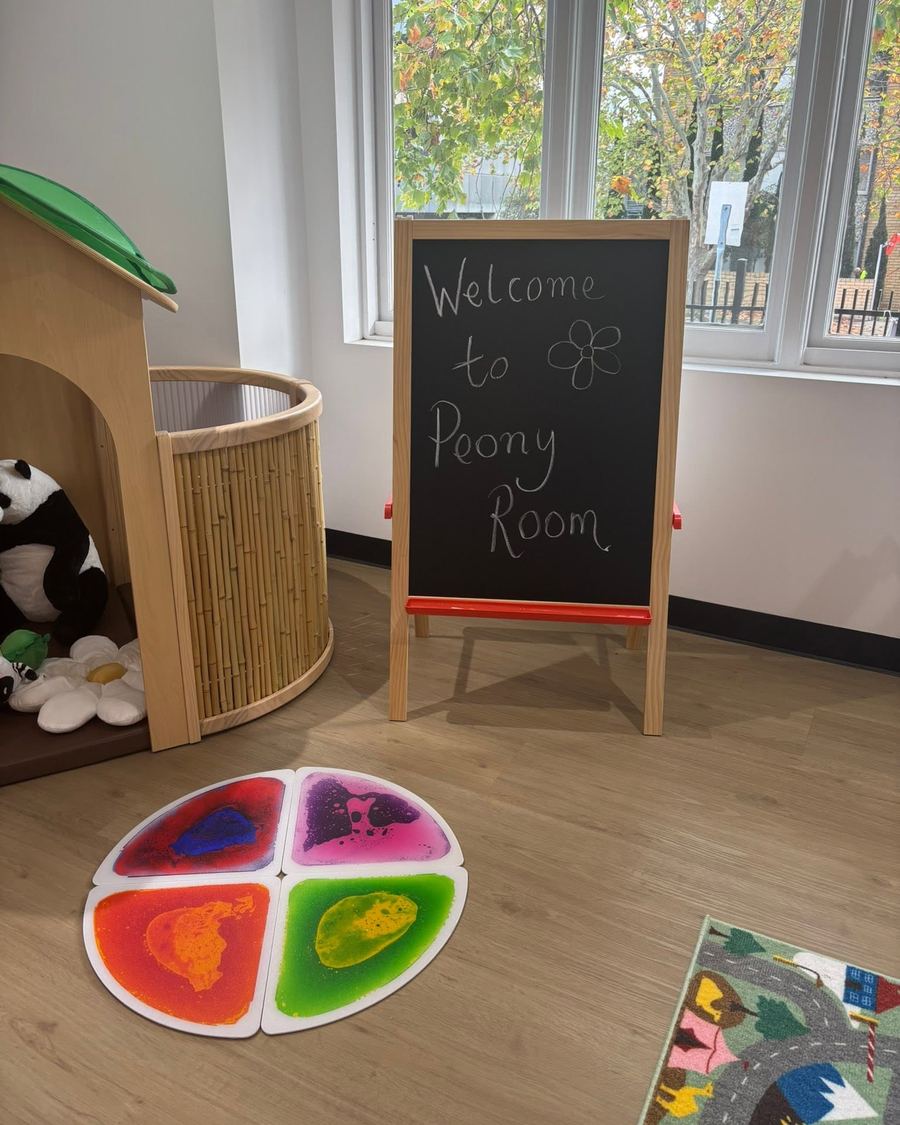
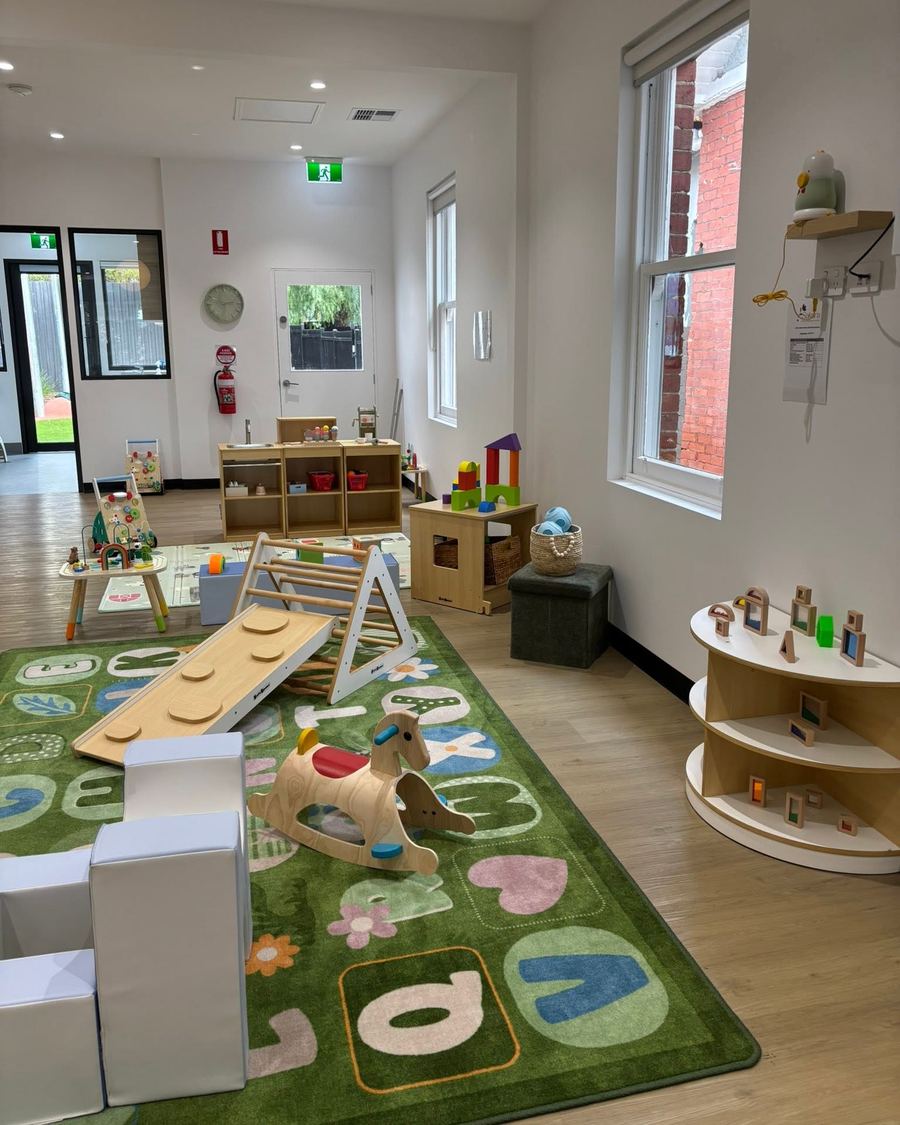
Toddlers are busy, curious and growing fast. In Peony they build independence, language and friendships through play, small-group experiences and everyday routines. An extra educator works above the 1:4 ratio so toddlers can move freely between the room and the garden.
- Group time and intentional teaching: experiences planned from children's interests, cultures and families' ideas
- Mealtimes: toddlers wash their hands, serve themselves and feed themselves with support
- Toilet learning when your child is ready, with the same approach at home and at the centre (please bring pull-ups)
- Rest time after lunch on foam beds with soft music or stories; children who fall asleep are not woken, and you can talk with us about how long your child sleeps
- Outdoor play through the day: running, climbing, digging and exploring nature
Hana · 3 – 5 years
Hana is our kindergarten room. Our Early Childhood Teacher leads a stimulating, play-based program that builds the confidence, curiosity and independence children take with them to school.
- Group time each morning, starting with an Acknowledgement of Country, to share news and plan the day together
- Small-group learning on children's interests, with early literacy, numeracy, problem-solving and social skills woven through play
- Relaxation and mindfulness after lunch, which may include yoga, soft music or stories
- Self-help skills: serving meals, packing bags and caring for belongings
- School readiness and a Transition Learning and Development Statement for every child starting school
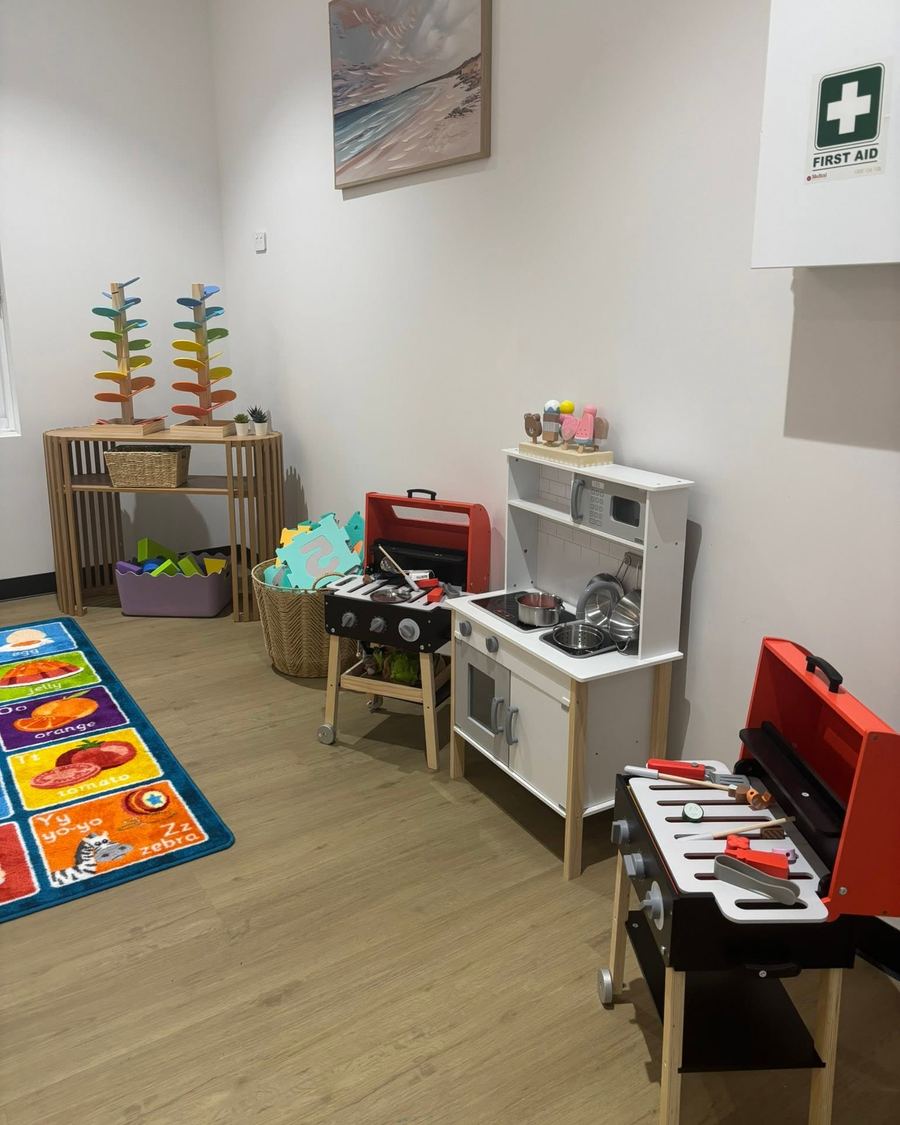
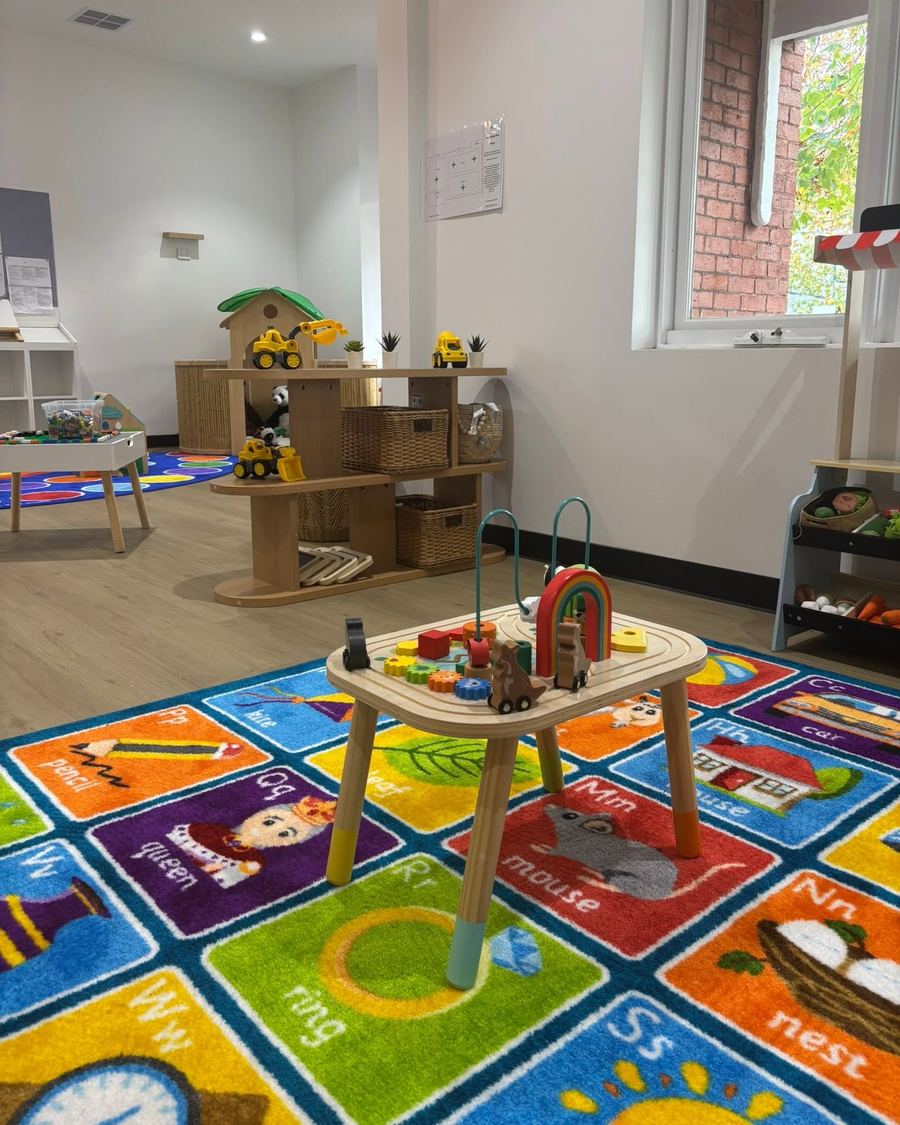
Our day follows a rhythm, not a strict timetable
Times change with children's needs and interests each day, and babies always follow their own routine. This is the general shape of the day in every room.
| Time | What happens |
|---|---|
| 7.00 am | Centre opens. Early arrivals start the day together in Yuri with the opening educators (family grouping). |
| 7.00 – 9.30 am | Indoor and outdoor play following the room's plan. We suggest children arrive by 9.30 am so they can join in the whole morning. |
| 9.30 am | Group time and Acknowledgement of Country. |
| 10.00 – 10.30 am | Wash hands, morning tea (milk and water). |
| 10.30 am – 12.30 pm | Indoor and outdoor play, intentional teaching and small groups. |
| 12.30 – 1.00 pm | Wash hands, lunch (water). |
| 1.00 – 1.30 pm | Rest, relaxation and mindfulness. Babies sleep whenever they need to. |
| 1.30 – 3.30 pm | Indoor and outdoor play following the program. |
| 3.30 – 4.00 pm | Wash hands, afternoon tea (milk and water). |
| 4.00 – 6.00 pm | Pack bags, indoor and outdoor play, late snack, and goodbyes as children go home. The centre closes at 6.00 pm. |
At pick-up, educators share your child's day with you, and photos and learning stories are posted on the OWNA app.
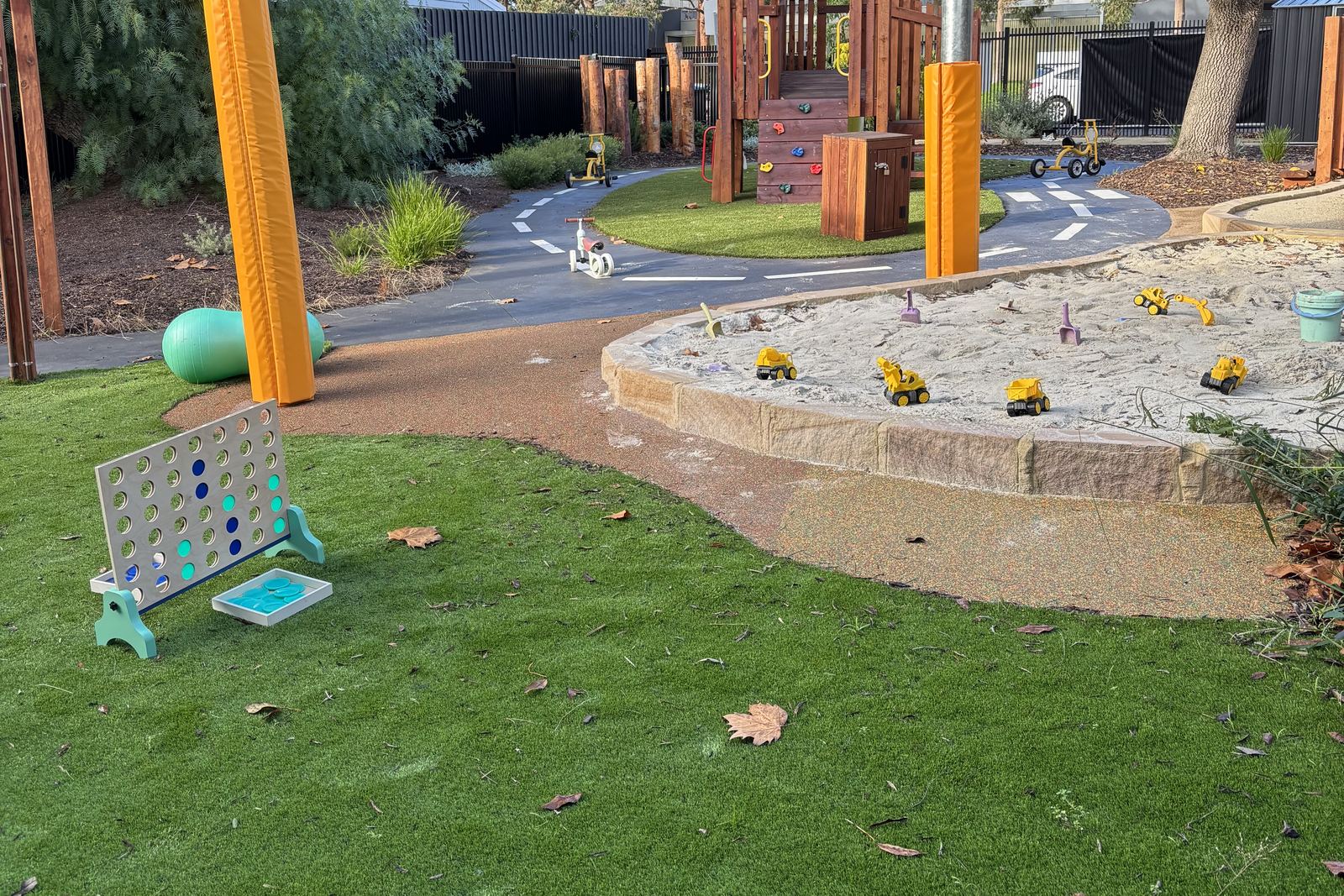
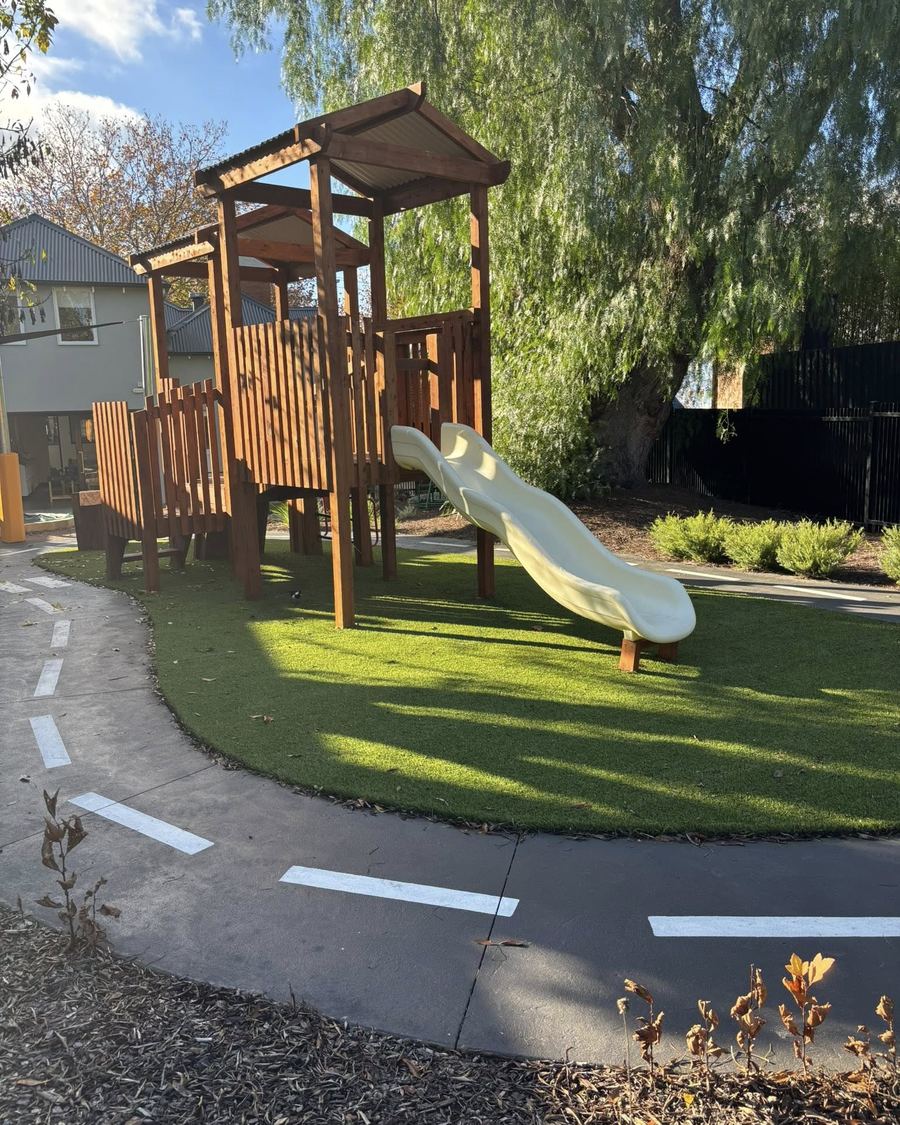
An all-natural playground with room to explore
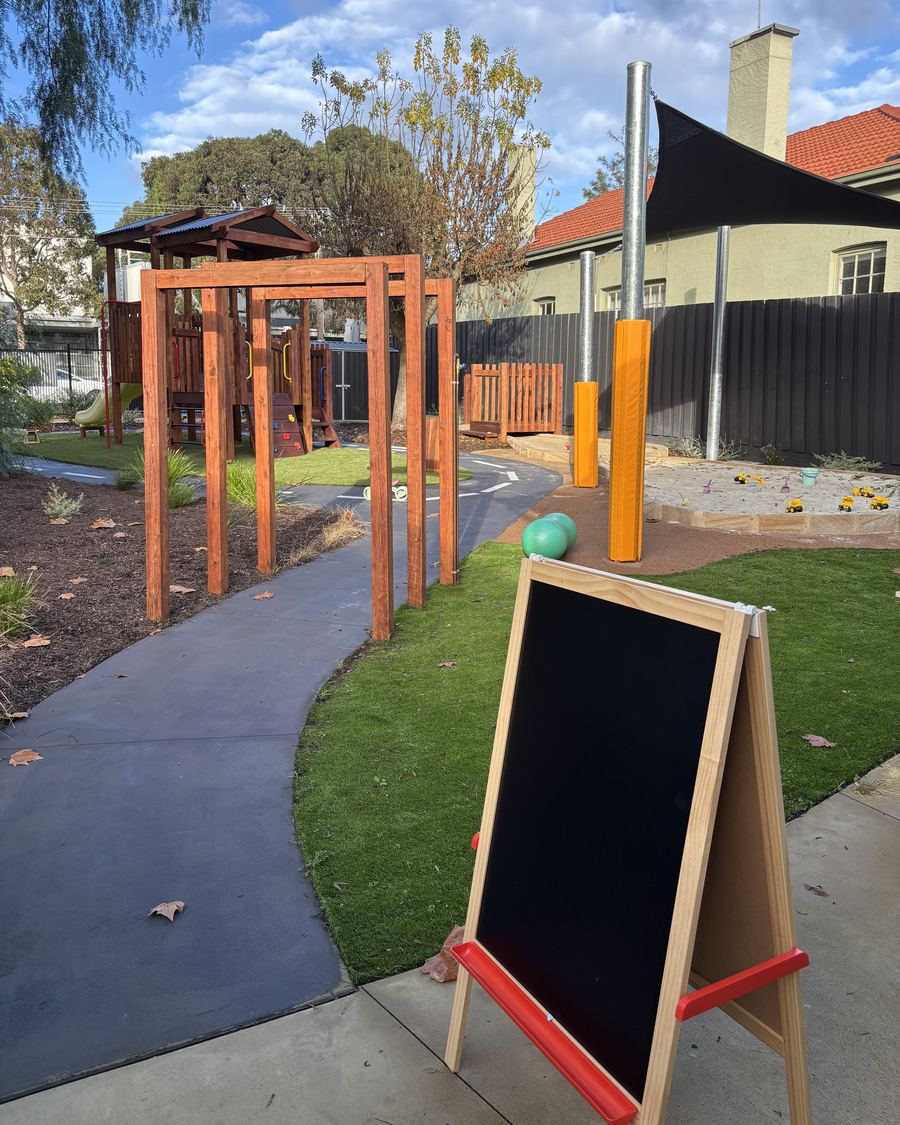
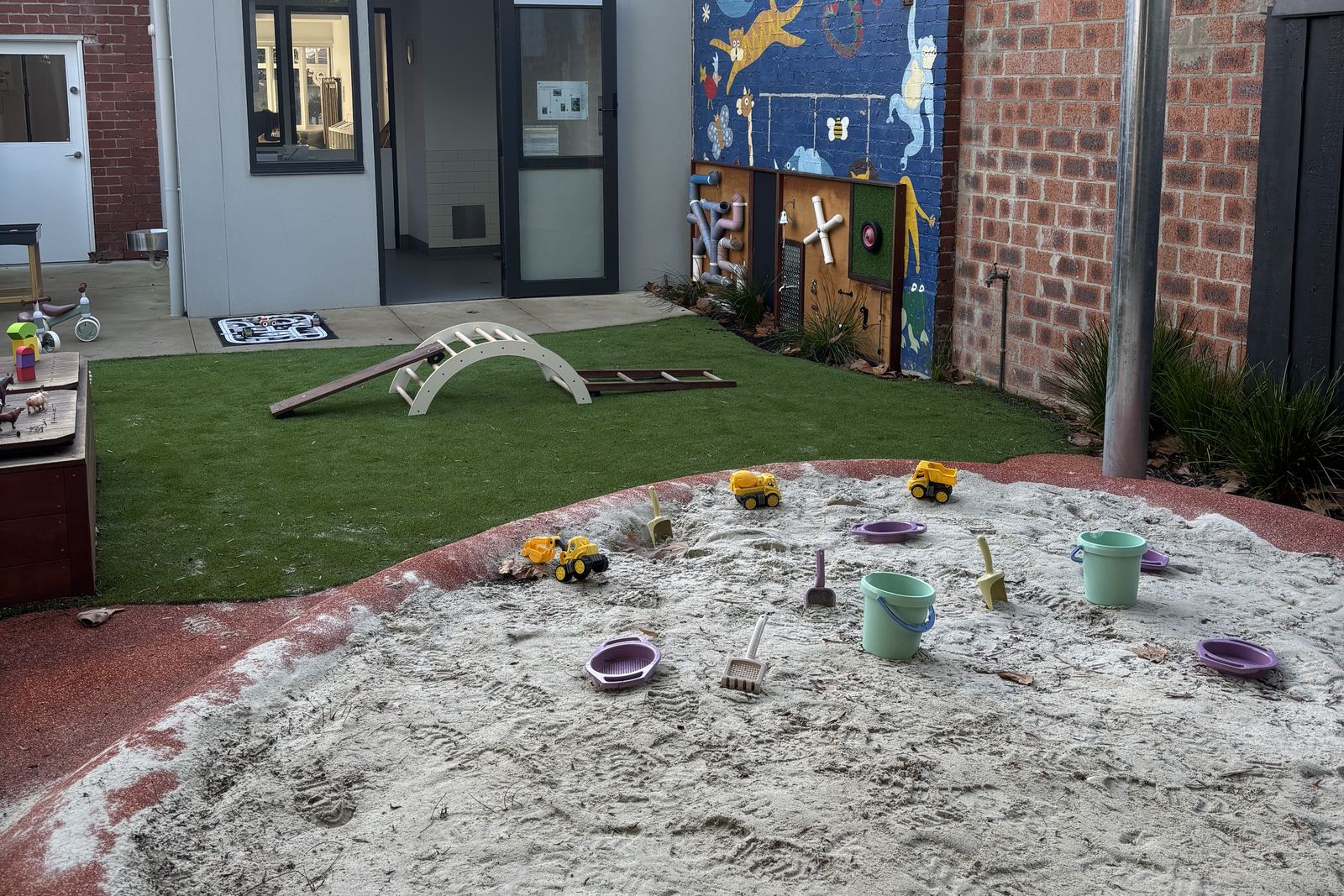
Our garden wraps around the building and is full of places to play, discover and rest:
- A winding bike track with road markings and a pedestrian crossing
- A large sandpit for digging, building and pretend play
- A timber fort with a slide, climbing wall and lookout
- Timber climbing and balancing posts among native plantings
- Artificial lawn, shade sails and established trees for shade
- A colourful mural wall and outdoor easels for art
Sun protection
Everyone wears a hat outside, and we apply SPF50+ sunscreen (which we provide) whenever the UV Index is 3 or above. Please apply sunscreen before arrival and pack a sun hat every day.
Fresh, healthy meals cooked on site every day
Our seasonal rotating menu is created by our chef with families and educators, using Nutrition Australia's healthy eating guidelines. A vegetarian option is offered every day.
| Sample week | Morning tea | Lunch | Afternoon tea |
|---|---|---|---|
| Monday | Cheese toasties, fruit platter | Fish fingers with corn cobs and sweet potato mash Vegetarian: vegan patties | Saladas with spreads, fruit or vegetable platter |
| Tuesday | Crumpets with spreads, fruit platter | Lamb spaghetti bolognese with garlic bread Vegetarian: meat-free mince bolognese | Vanilla and apple sponge cake, fruit or vegetable platter |
| Wednesday | English muffins with spreads, fruit platter | Chicken sausages with bread and mashed potato Vegetarian: vegan sausages | Pita bread, dip and cheese with carrot, cucumber and apple sticks |
| Thursday | Fruit toast with spreads, fruit platter | Chicken and vegetable stir-fry with pad thai noodles Vegetarian: meat-free chicken stir-fry | Greek yoghurt and fruit salad |
| Friday | Assorted cereals, fruit platter | Vegetarian fried rice with brown rice, carrot, capsicum, peas and corn | Banana muffins, fruit or vegetable platter |
Late snack
Children are offered fruit, rice cakes or rice crackers in the late afternoon.
Babies starting solids
Children under 12 months are only offered foods already tried at home, prepared to a texture that suits their age.
Allergies and dietary needs
Children with medical, religious or cultural dietary needs receive a version of the menu tailored to them. Tell us at enrolment.
The sample is week 1 of our Spring menu. The current menu is shared with families each week on OWNA.
Ready, confident and excited for school
Transitions, whether from room to room, or from Sakura to school, are planned with families so children feel secure at every step.
- Room transitions are gradual, with visits to the new room before the move
- The kindergarten program builds the independence, communication and social skills that help children settle at school
- We prepare a Transition Learning and Development Statement (TLDS) for each child starting school, shared with you and your child's school
- We celebrate the end of the kindergarten year with a graduation for children heading to school
Stay connected with OWNA
Every family gets access to the OWNA app, where you can see:
- daily snapshots with photos of your child's day
- individual learning observations and summative assessments
- stories from cultural celebrations and community events
- the weekly menu and centre news
You can also message your child's room and comment on stories. Parents sign children in and out on the OWNA kiosk at the front desk.